
September 2026
The Growing Need for Decarbonised Hubs
As the world pushes forward to meet ambitious climate goals like the EU Green Deal and global net-zero ambitions, transforming logistics at major freight hubs like airports and ports becomes imperative. Both environments share unique challenges and opportunities when integrating battery-electric trucks (BETs) into operations. Serving as cornerstones of global commerce, their emissions primarily fall under Scope 3, encompassing third-party logistical activities. BETs not only represent a cleaner alternative but also align with future visions of zero-emission airports and ports.
Case Studies at Schiphol and the Port of Rotterdam
TULIPS at Schiphol Airport
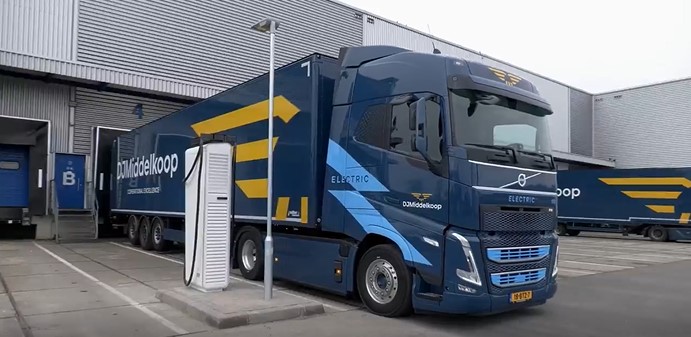
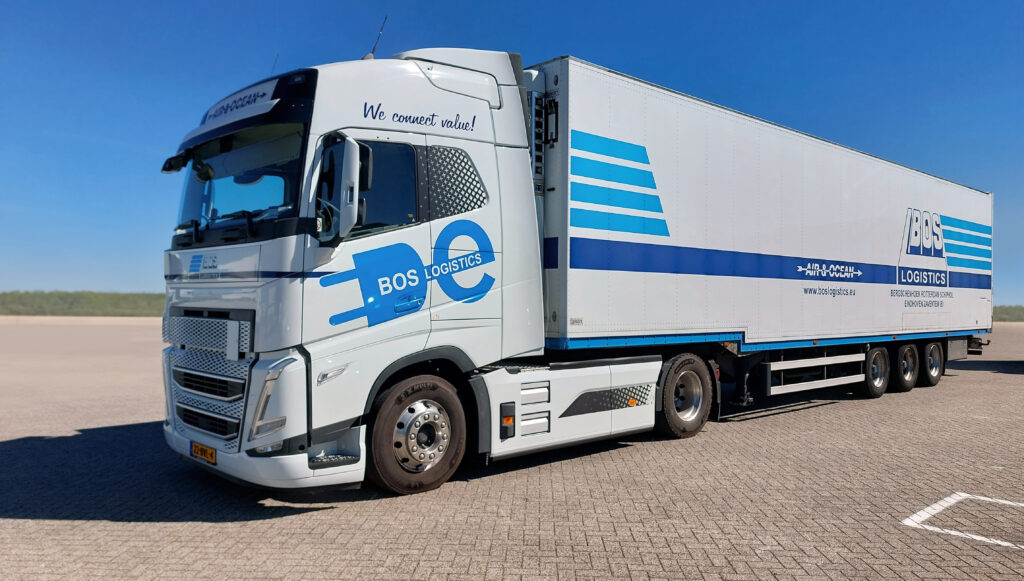
One example of green airport innovation is the TULIPS project at Amsterdam’s Schiphol Airport. This initiative focuses on the deployment of three 40-ton battery-electric Volvo trucks in real-world logistics operations. Over the two-year trial period, these trucks demonstrated substantial emissions reductions, avoiding more than 70 tons of CO2 equivalent while reducing harmful nitrogen oxide (NOx) emissions by 46%. Integrating these trucks also showcased operational feasibility and led to important findings on cost-effectiveness and environmental performance.
The TULIPS project highlighted that the introduction of BETs into time-sensitive ground operations, such as air cargo transportation, not only contributes to significant decarbonisation but also sets benchmarks for their operational viability in airport environments.
MAGPIE at Port of Rotterdam
Ports grapple with high-density freight flows and the need for heavy-duty vehicle integration. In response, Rotterdam’s Maasvlakte II terminal participated in the MAGPIE project, testing an automated hands-free electric truck charging system. This demonstration integrated a DAF truck with Rocsys’ robotic charger, enabling vehicles to autonomously dock and recharge without disrupting critical operations. The system optimised workflows by using downtime for charging and flexibly automating energy management.
The MAGPIE trials reaffirmed the feasibility of seamlessly employing BETs even in high-capacity port terminals, paving the way for further innovations in electric drayage and port logistics automation.
Shared Challenges and Common Ground
Despite operational differences, airports and ports face mutual hurdles regarding electrification:
- Infrastructure Investments: Both hubs require scalable and efficient electric charging networks. For example, Schiphol’s trials revealed limited public charging options for BETs, while Rotterdam demonstrated the importance of on-site, strategically placed charging systems.
- Cost Barriers: BETs involve high upfront costs compared to diesel alternatives. New taxes and ETS2 will improve the competitiveness of e-trucks, especially at higher mileages. By 2030, falling battery costs are expected to further reduce e-truck operating costs, although purchase prices will likely remain higher than for diesel trucks.
- Grid Limitations: Charging fleets of electric trucks can strain local energy grids. Power grid optimization and renewable energy integration are pivotal next steps for both sectors.
Opportunities in the Transition
Environmental Gains
Both projects conclusively demonstrated significant reductions in GHG emissions from BETs. For example, the TULIPS e-trucks achieved zero tailpipe CO2 emissions, with further potential for improvement as renewable energy grids expand. Ports like Rotterdam align these gains with long-term ambitions to create zero-emission zones by 2050.
Automated Innovations
Through initiatives like MAGPIE, ports have shown how technologies like hands-free and automated charging systems can streamline operations while reducing downtime.
Policy Support
Policy support through road charging reform and carbon pricing is expected to accelerate the shift towards electric trucks by improving their total cost of ownership relative to diesel vehicles. Airport and port operators require alignment with broader decarbonisation policies.
Building Zero-Emission Airports and Ports of the Future
To fully realize zero-emission hubs, more robust policies, technological innovation, and collaborations across sectors will be crucial. Both Schiphol and the Port of Rotterdam serve as demonstrations that early adoption of BETs is feasible and impactful. However, scaling these technologies will depend on widespread investment in grid capacity, megawatt charging installations, and policy harmonisation.
While early projects like MAGPIE and TULIPS show promising results, they point to the need for a systemic shift. Transitioning from demonstration to full-scale deployment will require deeper collaborations between infrastructure developers, governments, and private operators, backed by adequate funding and aligned stakeholder ambition.
In summary, Schiphol and Rotterdam provide compelling blueprints for decarbonising logistics at airports and ports. By adopting BETs and innovating both technology and policy, they are paving the way for cleaner and more efficient global trade.