
Guidelines
TULIPS has drawn up a set of guidelines to help airports take steps towards less waste and emissions. You can view or download them here.
-
From Better Bin Stickers to Better Waste Systems
This report presents the findings of a passenger waste-separation pilot at Amsterdam Airport Schiphol and translates these into practical guidance for other airports. The results show that improved bin communication alone does not consistently reduce contamination, highlighting the need for a broader systems approach. The report provides six practical tools to help airports understand their waste system, evaluate passenger waste separation and make evidence-based decisions.
Download (22 MB) -
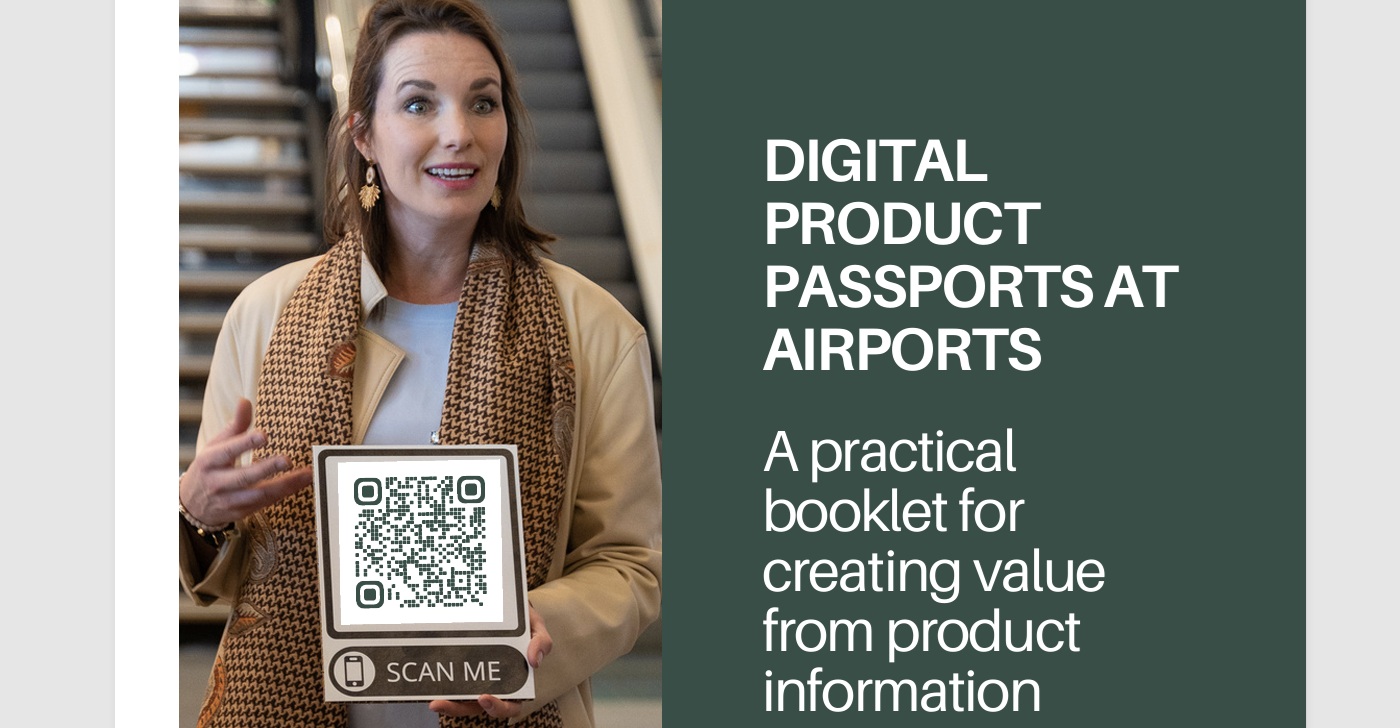
Digital Product Passports at Airports (circular airports)
This report introduces Digital Product Passports and explores how airports can use product information to support asset management, compliance, maintenance and reuse. Examples from Amsterdam Airport Schiphol, Avinor Oslo and Hermes Larnaka demonstrate the value of digitally tracking assets. The report provides a practical step-by-step approach for identifying opportunities, selecting priority product groups, running pilots and measuring their value. We invite airports to use these tools and insights to start testing and scaling DPP applications.
Download (13 MB) -
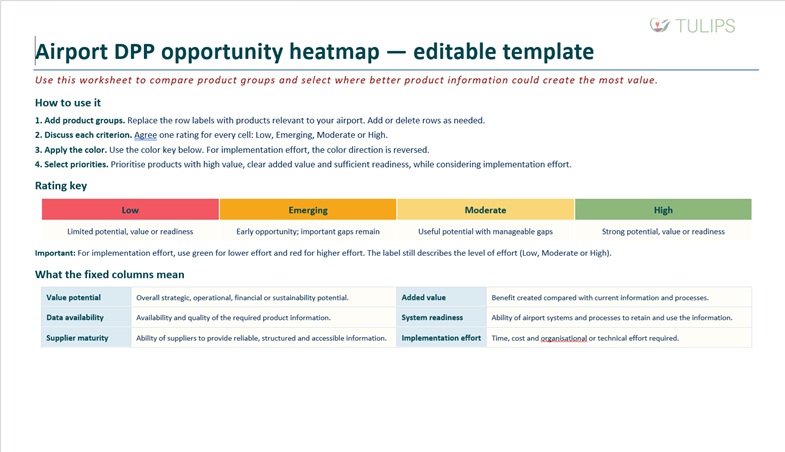
DPP Opportunity Heatmap template (circular airports)
This template for an airport DPP opportunity heatmap helps airports compare product groups across six criteria: value potential, added value, data availability, system readiness, supplier maturity, and implementation effort. Users can add relevant product groups and rate each criterion from low to high. The heatmap supports structured discussion and helps identify where Digital Product Passports could create value and offer feasible opportunities for implementation
Download (46 KB) -
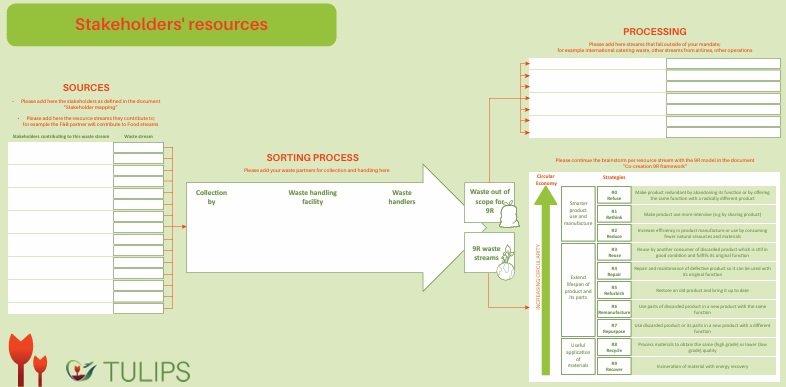
Stakeholders’ Resources (circular airports)
This template helps airports map operational resource flows from stakeholder to processing. It identifies who generates each waste stream, how it is collected and handled, which streams fall within the airport’s scope, and where circular interventions can be applied using the 9R framework.
Stakeholders’ Resources template -
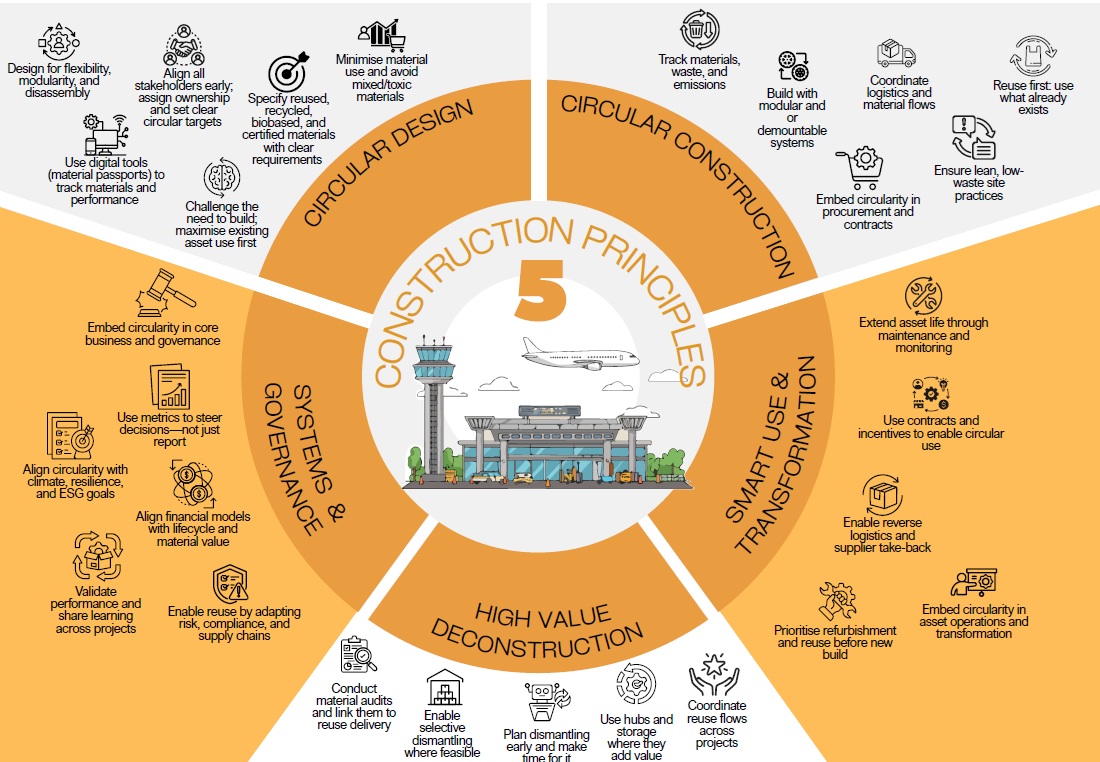
Circular Construction at Airports
This booklet bridges circular construction ambition and practical delivery within the demanding reality of airport environments, where safety, operational continuity and compliance are non-negotiable. It distils extensive research and real-world validation into clear, actionable guidance for practitioners. By translating principles into concrete steps across the asset lifecycle, it supports airports in embedding circularity at scale—turning complex challenges into achievable, repeatable practice.
Download (12 MB) -
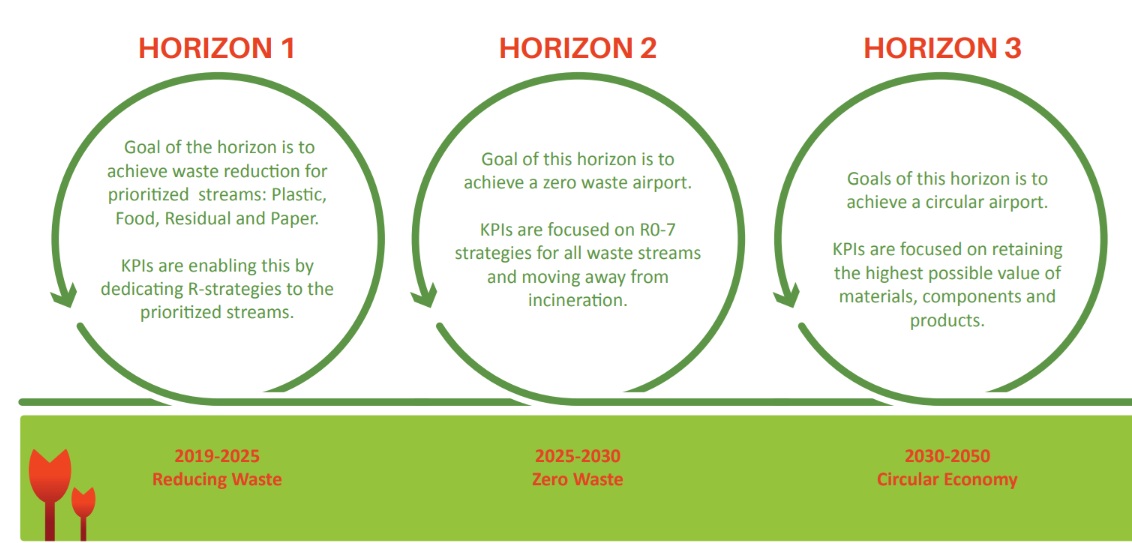
Conceptual Models and Horizons (circular airports)
This framework outlines a structured approach for airports to transition towards a circular economy across three horizons: reducing waste, achieving zero waste, and reaching full circularity by 2050. It combines the R-ladder and Value Hill models to guide actions and define KPIs over time. For airports, it provides a practical tool to prioritise initiatives, track progress, and align with industry standards—helping reduce waste, avoid incineration, and maximise material value.
Download (892 KB) -
EU-ATLAS on Circularity in Airports
Airports are complex ecosystems with significant influence over infrastructure, operations and regulation, making them well‑positioned to advance circular transformation. In the Atlas, ten European airports share practical use cases to support knowledge transfer and harmonise circularity measurement. The Atlas highlights key trends, regulations and priorities shaping circular economy progress in EU airports, and outlines options for monitoring impact. Drawing on the use cases, it summarises lessons learned and identifies expected future developments in circular airport operations.
Download (7 MB) -

Airport Circularity Baseline Study (comprised version)
This report introduces a circular economy approach and provides a 2019 baseline assessment for Amsterdam Airport Schiphol, Avinor Oslo, and Hermes Larnaca airports. Top findings highlight residuals, foodwaste, plastics and paper as priority areas based on the performed assessments. The report serves as a foundational guide for performing silimar assessments, scaling circular solutions and advancing airport’s circularity. We invite other airports to leverage these methods and insights as a starting point.
Download (3 MB) -

Test Protocol Waste Safari (circular airports)
A Waste Safari, also known as a waste audit, is a systematic evaluation and analysis of the waste generated within an airport. You can effectively utilise this protocol to plan and conduct a Waste Safari at your airport. By doing so, you can gain valuable insights into the airport’s waste streams, pinpoint areas for waste reduction or diversion efforts, and help raise awareness about the environmental impact of waste.
Download (318 KB) -

Stakeholder identification document (circular airports)
This template for a stakeholder map helps identify stakeholders involved in terminal waste streams across six categories: retailers, employees, operators, passengers, F&B, and facilities. It aids airports in establishing communication strategies and defining stakeholder roles. Users can categorize stakeholders and related communication strategies, such as keeping stakeholders informed, fostering collaboration, or designating main stakeholders, streamlining effective engagement and communication planning
Download (539 KB) -