
November 2025
On Monday, 24 November, Rotterdam The Hague Airport (RTHA) reached an important milestone: Robert Simons, Deputy Mayor of Rotterdam, officially opened a liquid hydrogen refuelling station at the airport. This facility, developed within the European TULIPS project, marks valuable progress towards sustainable aviation and reducing CO₂ emissions.
Innovation for Research and Development
The new facility is primarily designed for research purposes. It enables the dispensing of liquid hydrogen for research and development aircraft and drones.
Why Liquid Hydrogen?
Hydrogen is considered a promising alternative fuel for aviation. In its liquid form, it has a high energy density, making it suitable for medium-haul distances and larger aircraft. Using hydrogen can help the aviation sector achieve its climate goals: CO₂ neutrality by 2050.

What Has Been Achieved?
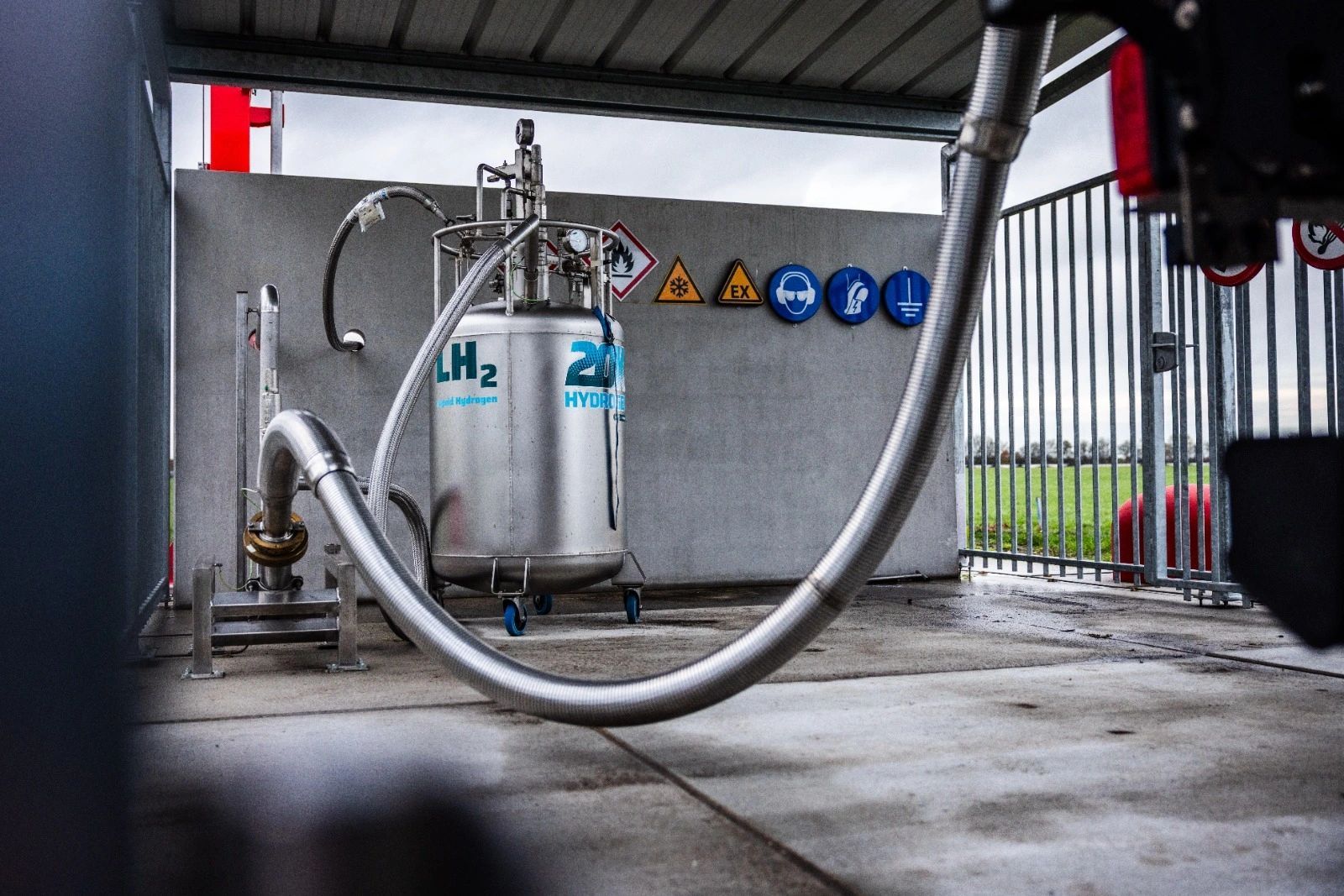
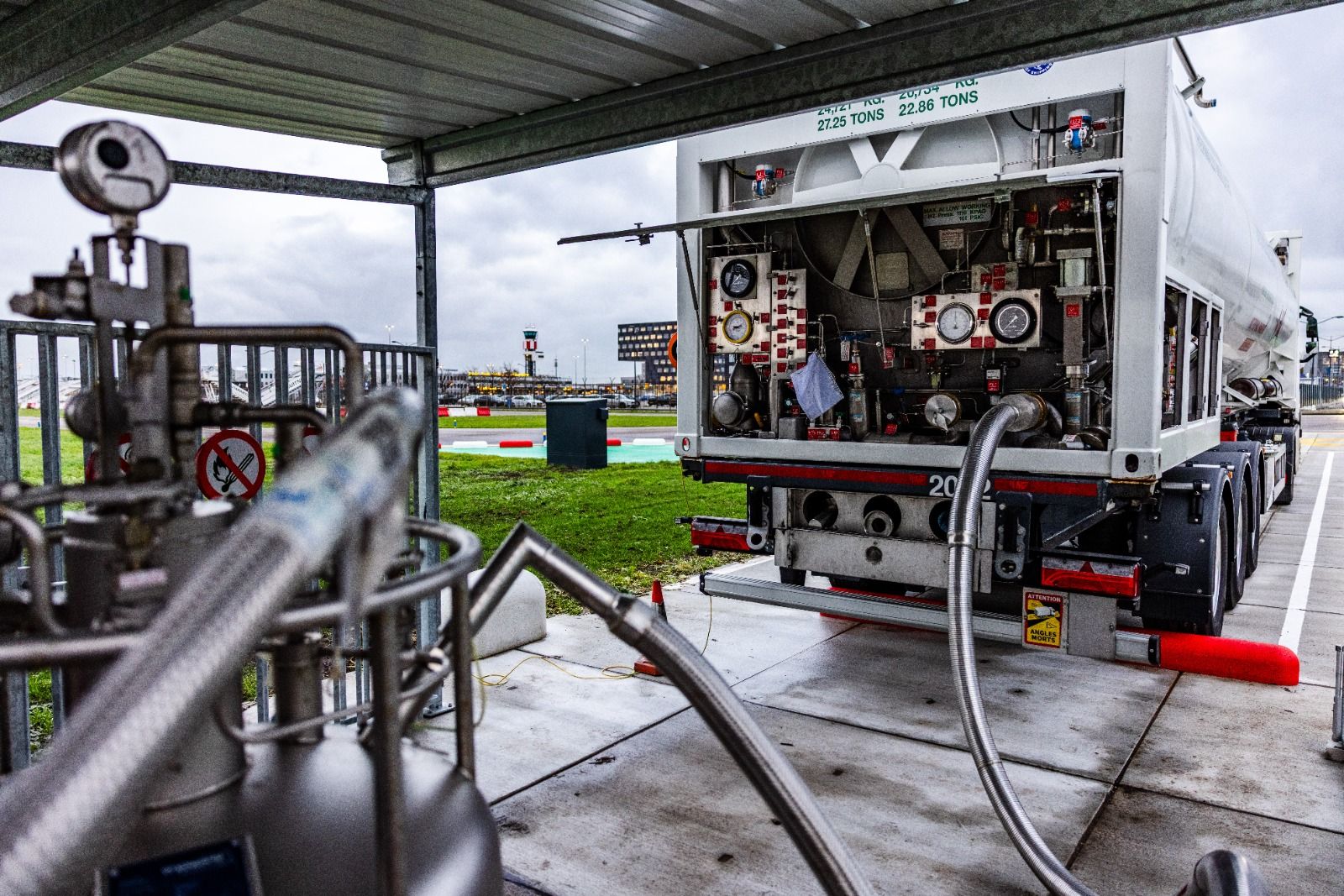
The new station at Rotterdam The Hague Airport has been designed for the small-scale storage and distribution of liquid hydrogen. An environmental permit has been granted for this purpose. The airport fire brigade was also involved at an early stage due to changes in incident response procedures.
The station serves as a demonstration project to:
- Test safety and operational processes for LH2 at operational civil airports
- Support hydrogen-powered aircraft and drones, such as NLR’s HYDRA-II drone and future small scale R&D aircraft
- Stimulate collaboration between partners, including TULIPS partners TU Delft and NLR, as well as external parties such as AeroDelft
The installation includes a cryogenic tank of approximately 125 litres, enabling initial tests and demonstrations, with the option to expand to 500 litres. A cryogenic tank is a specialised storage vessel designed to safely hold extremely cold liquids. For liquid hydrogen, this means temperatures at or below -253 °C. The tank features a double-walled design, excellent insulation, pressure resistance, and multiple safety systems.
Collaboration within TULIPS
The project is part of the EU TULIPS programme and the DutcH₂ Aviation Hub at RTHA.
“The facility serves as a concrete example of how collaborative research can be effectively integrated into operational environments. By providing an accessible platform at the airport and access to liquid hydrogen, we open doors to multiple research projects.”
– Daan van Dijk, Programme Manager of the DutcH₂ Aviation Hub

Looking Ahead
The opening of the refuelling station is just the first step. In the coming years, RTHA will:
- Expand the facility to handle larger volumes and to work towards a zero boil-off system
- Facilitate test flights with hydrogen-powered aircraft
- Contribute to European standards for cryogenic storage and safety